kr 289
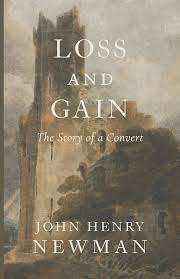
Loss and Gain: This semi-autobiographical story of a convert, set during the Tractarian controversy in the Church of England in the 1820s, follows the young Oxford student, Charles Reding, as he seeks solid ground for his faith. In the heady intellectual climate of Oxford, Charles takes a part in its involved, at times impassioned, religious and ecclesiastical debates, wrestling with the sectarian, the evangelical, and the Catholic interpretations of what constitutes the true Church—as founded by Christ himself and “as defined in the Creeds.”
Most famous for his cogent scholarship, persuasive apologetics, and profound sermons, St. John Henry Newman was also a gifted novelist. Writing in 1852, at the heights of the rise of the novel as a literary form, Newman offered this assessment of literature’s purpose:
“Man is a being of genius, passion, intellect, conscience, power. He exercises these various gifts in various ways, in great deeds, in great thoughts, in heroic acts, in hateful crimes. He founds states, he fights battles, he builds cities, he ploughs the forest, he subdues the elements, he rules his kind. He creates vast ideas, and influences many generations. He takes a thousand shapes, and undergoes a thousand fortunes. Literature records them all to the life…”
Kun 2 på lager
Vi tar forbehold om at lagerstatusen kan være feil. Dersom du vil være helt sikker på om vi har noe på lager, ta gjerne kontakt med oss!
Loss and Gain: This semi-autobiographical story of a convert, set during the Tractarian controversy in the Church of England in the 1820s, follows the young Oxford student, Charles Reding, as he seeks solid ground for his faith. In the heady intellectual climate of Oxford, Charles takes a part in its involved, at times impassioned, religious and ecclesiastical debates, wrestling with the sectarian, the evangelical, and the Catholic interpretations of what constitutes the true Church—as founded by Christ himself and “as defined in the Creeds.”
Most famous for his cogent scholarship, persuasive apologetics, and profound sermons, St. John Henry Newman was also a gifted novelist. Writing in 1852, at the heights of the rise of the novel as a literary form, Newman offered this assessment of literature’s purpose:
“Man is a being of genius, passion, intellect, conscience, power. He exercises these various gifts in various ways, in great deeds, in great thoughts, in heroic acts, in hateful crimes. He founds states, he fights battles, he builds cities, he ploughs the forest, he subdues the elements, he rules his kind. He creates vast ideas, and influences many generations. He takes a thousand shapes, and undergoes a thousand fortunes. Literature records them all to the life…”
| Forfatter | |
|---|---|
| Forlag | Cluny Media |
| Format | Heftet |
| ISBN | 9781685953577 |
| Antall sider |

Omtaler
There are no reviews yet