kr 329
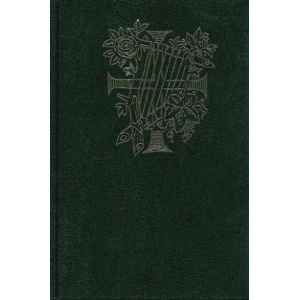
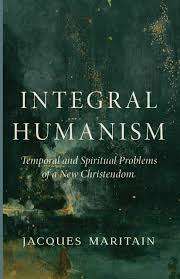
“Monstrous energies,” Jacques Maritain sharply observes, have ravaged the modern world in its descent from the Renaissance and the Reformation. Error and truth have become strangely entangled, each confusing or malforming the other into a state in which “truths lie and lies speak the truth.” A boldly ambitious attempt to purify “these unnatural and deadly products, and to save the truths that they distort,” Integral Humanism is both diagnosis of and remedy for the relationship between religion and culture, outlining the concrete historical ideal suitable to a new Christian civilization. After surveying humanism’s many historical forms—medieval, classical, anthropocentric, atheistic—and the myriad merits and demerits of each, Maritain proposes the model for a “new Christendom,” whose principles come from the clear and creative genius of St. Thomas Aquinas.
Published first in English in 1936 as True Humanism, and in revised translation in 1968 as Integral Humanism, Maritain’s act of “practical philosophy” ranks among the most influential works of twentieth-century Catholic social thought and is a dynamic expression of “true” or “integral” humanism as that which strives to uphold man, individually and communally, in relation to God.
Man is not ordained to the body politic, according to all that he is and has… But all that man is, and can, and has, must be referred to God… (St. Thomas Aquinas)
A humanism which excludes God is an inhuman humanism. (Pope Benedict XVI)
Kun 2 på lager
Vi tar forbehold om at lagerstatusen kan være feil. Dersom du vil være helt sikker på om vi har noe på lager, ta gjerne kontakt med oss!
“Monstrous energies,” Jacques Maritain sharply observes, have ravaged the modern world in its descent from the Renaissance and the Reformation. Error and truth have become strangely entangled, each confusing or malforming the other into a state in which “truths lie and lies speak the truth.” A boldly ambitious attempt to purify “these unnatural and deadly products, and to save the truths that they distort,” Integral Humanism is both diagnosis of and remedy for the relationship between religion and culture, outlining the concrete historical ideal suitable to a new Christian civilization. After surveying humanism’s many historical forms—medieval, classical, anthropocentric, atheistic—and the myriad merits and demerits of each, Maritain proposes the model for a “new Christendom,” whose principles come from the clear and creative genius of St. Thomas Aquinas.
Published first in English in 1936 as True Humanism, and in revised translation in 1968 as Integral Humanism, Maritain’s act of “practical philosophy” ranks among the most influential works of twentieth-century Catholic social thought and is a dynamic expression of “true” or “integral” humanism as that which strives to uphold man, individually and communally, in relation to God.
Man is not ordained to the body politic, according to all that he is and has… But all that man is, and can, and has, must be referred to God… (St. Thomas Aquinas)
A humanism which excludes God is an inhuman humanism. (Pope Benedict XVI)
| Vekt | 0,04 kg |
|---|---|
| Forfatter | |
| Forlag | Cluny Media |
| Format | Heftet |
| ISBN | 9781685953485 |
| Antall sider |

Omtaler
There are no reviews yet