Beskrivelse
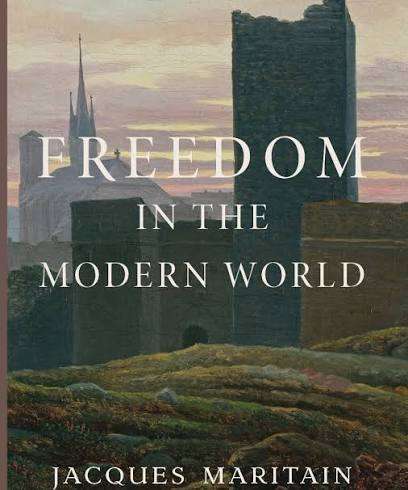
Reason, freedom, and law: upon these three principles, asserts Jacques Maritain, civilization rests. For the modern world, these principles have regularly proved disposable, and the protean will to power has arisen to take their place. A return to the proper order requires a deep understanding of freedom and acceptance of its attendant risks as well as its rewards. In Freedom in the Modern World, Jacques Maritain devotes himself to that task. First, he articulates a philosophy of freedom to show that freedom presupposes nature. Second, he applies this philosophy to historical facts and political conditions, developing his earlier work on “Religion and Culture,” to discuss the opposition between a humanism centered on God and a humanism fixated on man. Last, he assesses the problem of freedom in practical terms, and considers the means by which modern man might achieve the radical reforms needed to produce a temporal order consonant with man’s spiritual nature and capable of sustaining his freedom and flourishing.
Taking its cue from Péguy’s remark that the social revolution will be a moral revolution or it will not be at all, Maritain’s Freedom in the Modern World warns that so long as man abuses his God-given freedom to do good and avoid evil, so also will he denigrate his state-issued liberty to live according to his own lights.
A system of ethics cannot be constituted unless its author is first able to answer the questions: What is man? Why is he made? What is the end of human life? (Jacques Maritain)

 The Friendship of Christ
kr 2591 × kr 259
The Friendship of Christ
kr 2591 × kr 259 The Angelic Doctor
kr 2891 × kr 289
The Angelic Doctor
kr 2891 × kr 289



Omtaler
There are no reviews yet